BMW Parts Number Lookup Tool
BMW Part Number Lookup Tool for VIN Fitment and Catalog Search
Locating exact component blueprints within our digital repository requires complete mechanical tracking parameters. Whether you are executing a routine maintenance task on a turbocharged TwinPower Turbo engine or managing a complex chassis restoration on an xDrive all-wheel-drive platform, identifying components by general description alone introduces significant error margins.
The digital BMW part number lookup engine at BMW Parts Warehouse interfaces directly with active Electronic Parts Catalog (EPC) mainframes, granting you immediate access to authentic engineering schemas, factory supersession tracking, and real-time warehouse inventory verification.
Utilizing a structural part identifier matching system based on precise vehicle variables is the most secure path to protect your vehicle assembly, maintain structural safety parameters, and eliminate shipping return overhead. This comprehensive tracking methodology ensures your replacement components remain completely synchronized with your vehicle's original factory configuration.
Two High-Precision Search Pathways: Keyword and VIN Systems
To accommodate whatever documentation or vehicle data you have on hand, our lookup interface is divided into two distinct processing pathways. Utilizing these dedicated tools guarantees you locate matching parts without tracking down complex paper catalogs:
- Search By Keyword (Part Number Input): Located on the left side of our lookup tool, this input is the fastest way to search for BMW parts if you have an active alphanumeric code. This is ideal if you have a number pulled directly from a stamped factory casing, a previous workshop invoice, or an insurance repair estimate.
- Search By VIN (Vehicle Identification Number): Located on the right side of our portal, this field is engineered to completely ensure part fitment. Inputting your unique vehicle tracking code strips away the guessing game of generalized model names, automatically filtering out non-compatible items based on your precise production month and factory-installed option groups.
The Structural Anatomy of an 11-Digit BMW Part Number
BMW utilizes a highly systematic, standardized 11-digit alphanumeric syntax to catalog every fastener, sensor, and mechanical assembly across its vehicle families. This structural sequence records explicit engineering data that traces a component down to its primary design loop.
Understanding this distinct sequence allows you to decode the history and exact layout configuration of your component directly from the markings on your vehicle:
| Part Number Segment | Digit Sequence | Functional Engineering Classification |
|---|---|---|
| Main Group Code | First 2 Digits | Identifies the primary automotive system (such as 11 for Engine, 31 for Front Suspension, 34 for Brakes). |
| Subgroup Code | Next 2 Digits | Narrows the search down to a specific sub-assembly block (such as 34 11, which isolates front brake calipers and rotors). |
| Core Index Number | Remaining 7 Digits | Specifies the exact physical part, dimensional blueprint specification, and manufacturing revision level. |
In retail packaging or technical service bulletins, parts departments frequently abbreviate this sequence into a shortened 7-digit index code. Our database search engine bridges both formats automatically.
Entering either the long 11-digit factory sequence or the short 7-digit casting number into the Search By Keyword field will instantly surface the identical, factory-authorized component wrapper and active inventory placement inside our hub.
Resolving Production Splits and LCI Revisions via VIN Search
BMW is notorious for executing running mechanical and electrical updates mid-year directly on the assembly line, along with major mid-generation refreshes known as Life Cycle Impulse (LCI) updates. These engineering shifts create complex production splits.
Two vehicles sharing the exact same model year, chassis code, and trim level can require entirely separate brake caliper carriers, alternator amperage limits, or oxygen sensor wiring connectors based on the specific month or factory of origin, such as Germany-built versus domestic assembly plants.
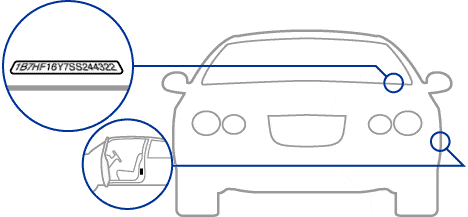
Relying on generalized catalog photographs or broad model filters is highly unreliable due to these hidden running production variances. Sourcing components via your unique 17-digit Vehicle Identification Number eliminates this error margin completely.
When you use the Search By VIN tool, our system instantly parses your chassis tracking code into its component data fields, isolating the World Manufacturer Identifier and the unique Vehicle Descriptor Section. The search catalog then automatically filters out incompatible numbers, isolating the exact factory blueprint assigned to your specific vehicle when it rolled off the line.
High-Sensitivity Systems Requiring Alphanumeric Verification
While standard exterior cosmetic trim pieces or interior floor mats allow for minor formatting variations, high-priority mechanical and electronic loops require mandatory validation through our digital platform before purchase:
- VANOS and Valvetronic Valve Train Internals: Variable camshaft timing solenoids, eccentric shafts, and dedicated return springs are calibrated down to the millimeter and require exact index number verification.
- Dynamic Stability Control (DSC) Modulators: ABS pump actuators, electronic steering angle sensors, and active wheel speed indicators tie directly into braking safety networks and dictate exact module number matching.
- xDrive Transfer Case and Drivetrain Hardware: Front axle shafts, center support bearings, and internal differential seals vary dramatically across sub-models and require direct VIN matching to ensure total system sync.
Restore Factory Performance and Precision Safely
Your vehicle operates as a highly integrated mechanical ecosystem, where every fastener, filter, and ignition module is balanced to sustain strict weight distributions, structural metrics, and safety standards.
Settling for cut-rate, unverified aftermarket substitutes compromises this engineering equilibrium, frequently triggering active diagnostic trouble codes (DTCs), early part degradation, and unpredictable electronic system faults.
By matching your numbers directly through the factory-authorized lookup portal at BMW Parts Warehouse, you secure uncompromised structural integrity and long-term driving safety for the miles ahead.